Emergency burst pipe cleanup
Burst Pipe Water Damage in Walnut Creek, CA
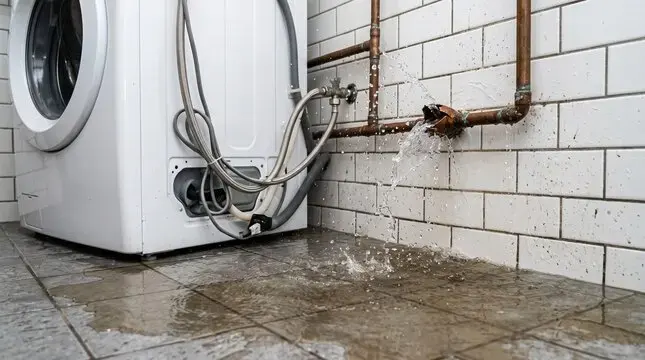
A split supply pipe can release hundreds of gallons an hour into a wall or ceiling. Shut the main, then the restoration team extracts the water and dries every cavity it reached.
(888) 774-9605Water spraying? Call now- 24/7 dispatch
- IICRC S500 drying standard
- Truck-mounted extraction
- First moveShut the main
- Flow rateHundreds of gallons an hour
- Water typeUsually Category 1
- StandardIICRC S500
Right now
First steps for burst pipe water damage in Walnut Creek
- 1
Shut the main
Find the main shutoff, usually near the front hose bib or in the garage, and close it.
- 2
Open a faucet low
Draining pressure from the lowest faucet slows what is still leaking inside the wall.
- 3
Switch off wet circuits
If water is near outlets or light fixtures, turn off those breakers when the panel is dry.
- 4
Do not open the ceiling
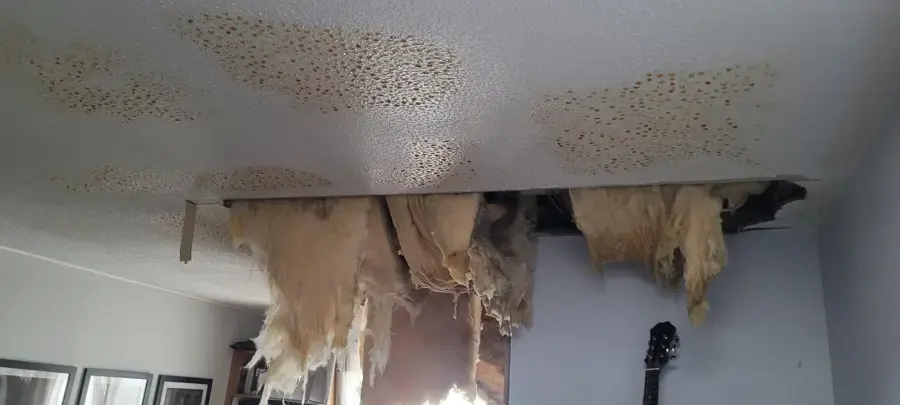
A sagging ceiling can hold a lot of water. Keep people out from under it.
The process
How burst pipe water damage is handled in Walnut Creek
- 1
Map the moisture
The tech who does the walkthrough uses thermal imaging and pinless meters to map every wet surface before any equipment goes down.
- 2
Extract the water
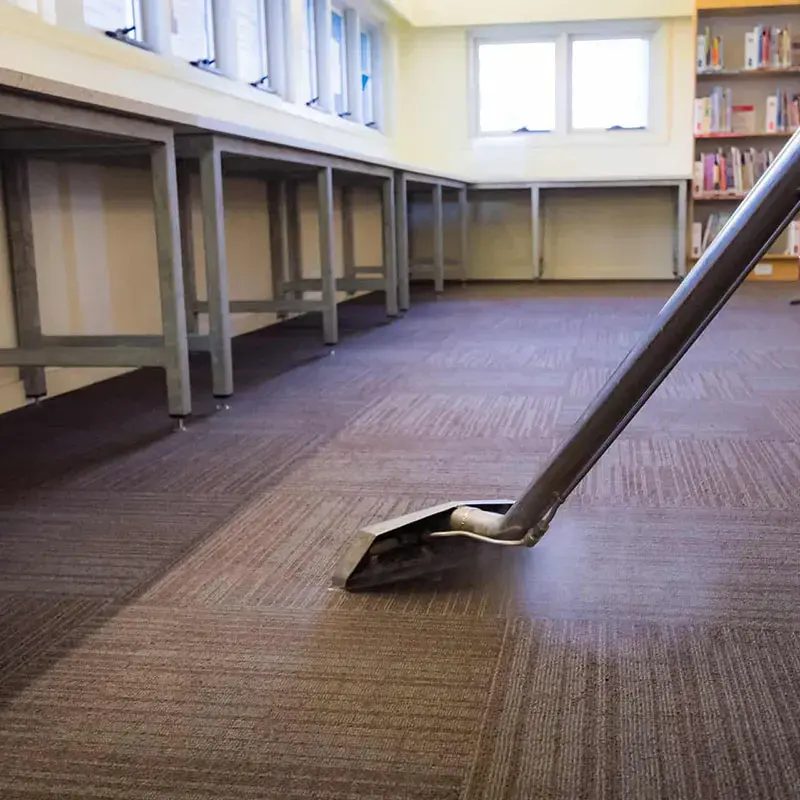
The extraction crew pulls standing water with truck-mounted or portable units, so the water leaves the building instead of spreading.
- 3
Set the drying plan
The drying team places air movers and LGR dehumidifiers to match the class of the loss and the evaporation load of each room.
- 4
Verify and document
The crew logs readings daily and removes equipment only when wet materials sit within 2 to 4 points of a dry reference.
Typical cost ranges
What does burst pipe water damage cost in Walnut Creek, CA?
In Walnut Creek, CA, burst pipe water damage typically runs $1,200 to $9,000, depending on how long the pipe ran, whether a ceiling came down, and how many wall cavities need drying.
One wall, caught early
$1,200 to $2,800
- Extraction
- Cavity drying
- Moisture map
Ceiling and floor below
$2,800 to $5,500
- Controlled drywall openings
- Air movers and LGR units
- Contents moved
Two levels
$5,500 to $9,000+
- Multi-room extraction
- Flood cuts where needed
- Full claim file
What moves the number
- Hours the pipe ran before shutoff
- Number of rooms and levels reached
- Material class, plaster and hardwood take longer
- Whether ceilings have to come down
Run your own numbers with the water damage cost calculator. These are typical ranges for the trade, not a quote.
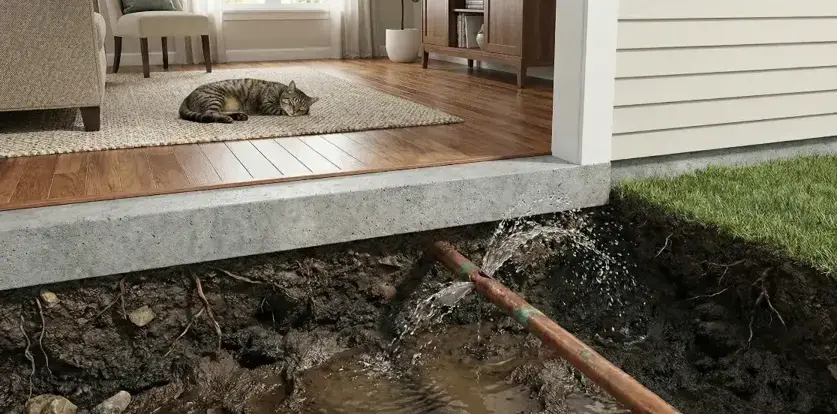
A burst pipe is pressurized water, not a slow drip. In Walnut Creek the usual suspects are aging galvanized lines in homes built in the 1950s and 1960s, pinholed copper, and failed fittings in attics and exterior walls. The pipe keeps pushing water until someone closes the valve, so the damage grows with every minute.
Where burst pipe water goes
Water follows gravity and framing. It runs down stud bays, soaks the bottom plate, spreads under baseboards and finds the floor below. The restoration team maps all of it before drying starts:
- Wall cavities on both sides of the break
- Ceilings and insulation below an upstairs or attic line
- Subfloor and joists in raised-foundation homes, covered in crawl space water removal
- Flooring that trapped water underneath, including hardwood
Drying in place versus opening walls
Clean water caught early can often be dried in place through small access holes at the base of the wall. Soaked insulation, wet ceiling drywall that is sagging, or water that sat long enough to turn gray usually means controlled removal. The drying team decides from readings, not guesswork.
Pipe repair and prevention
A plumber repairs the pipe while the drying runs. Older supply lines are worth checking once the house is dry; the EPA WaterSense leak checks shows simple ways to spot slow leaks, and the EPA overview of mold and moisture in homes explains why wet framing should dry fast.
Service area
Burst Pipe Water Damage across Walnut Creek, CA
The Walnut Creek restoration crew covers ZIP codes 94595, 94596, 94597 and 94598, from the downtown creek channels to the Diablo foothills.
Coverage reaches Downtown Walnut Creek, Rossmoor, Saranap, Northgate, Ygnacio Valley, Tice Valley, Lafayette, Pleasant Hill and Concord.
See every neighborhood and ZIP codeRelated
Related water damage services in Walnut Creek
Questions
Burst pipe water damage questions
What is the first thing to do when a pipe bursts?
Close the main water shutoff, then turn off breakers to wet rooms if the panel is dry. After that, move valuables and call for extraction.
Where is the main shutoff in a Walnut Creek house?
Most homes have it near the front hose bib, at the meter box by the street, or in the garage near the water heater. Find it before you need it.
Do walls always have to be torn out?
No. Clean water caught early can often be dried through small access holes. Walls come out when insulation is soaked, drywall has failed, or the water sat long enough to degrade.
Is burst pipe damage covered by insurance?
Sudden and accidental discharge is commonly covered, while long-term leaks and repairs to the pipe itself are treated differently. Coverage depends on your policy, so check with your own insurer.
How long does drying take after a burst pipe?
A contained loss often dries in three to five days. Plaster walls, hardwood and multi-level losses take longer, and equipment stays until readings reach the drying goal.
Why did a pipe burst when it never freezes here?
In the East Bay the causes are age, corrosion, water pressure and failed fittings, not freezing. Galvanized lines in older homes are a common source.
24/7 emergency water removal
Burst pipe in Walnut Creek? Shut the main and call.
The restoration team extracts the water, opens only what readings say to open, and dries to the IICRC S500 goal.